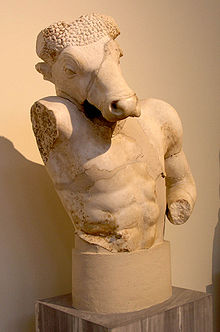
Dimensions height 46 cm
width 35 cm
depth 3cm
"Among historical figures, some were recorded as having relations with others of their own sex — exclusively or together with opposite-sex relations — while others were recorded as only having relations with the opposite sex. However, there are instances of same-sex love and sexuality within almost all ancient civilizations. Additionally, Transgender and third sex peoples have been recorded in almost all cultures across human history."
"In the ancient Assyrian society, if a man were to have sex with another man of equal status or a cult prostitute, it was thought that trouble will leave him and he will have good fortune.[17] Some ancient religious Assyrian texts contain prayers for divine blessings on homosexual relationships.[18][19] Freely pictured art of anal intercourse, practiced as part of a religious ritual, dated from the 3rd millennium BC and onwards.[20] Homosexuality was an integral part of temple life in parts of Mesopotamia, and no blame appears to have attached to its practice outside of worship.[19][21] Some kings had male lovers — both Zimri-lin (king of Mari) and Hammurabi (king ofBabylon) slept with men.[19] Some Assyrian priests were gay men who cross-dressed.[22] There were homosexual and transgender cult prostitutes, who took part in public processions; singing, dancing, wearing costumes, sometimes wearing women's clothes and carrying female symbols, even at times pretending to give birth.[23]"
Ancient Egypt
"An ostraca dating from the Ramesside Period have been found which depict hastily drawn images of homosexual as well as heterosexual sex. The duo Khnumhotep and Niankhkhnum, manicurists in the Palace of King Niuserre during the Fifth Dynasty of Egyptian pharaohs, circa 2400 BC.[6] are speculated to have been homosexual based on a representation of them embracing nose-to-nose in their shared tomb. King Neferkare and General Sasenet, a Middle Kingdom story, has an intriguing plot revolving around a king's clandestine homosexual affair with one of his generals. It may reference the actual Pharaoh Pepi II, who was likely a homosexual.[7][8]"
Early modern Egypt
"The Siwa Oasis was of special interest to anthropologists and sociologists because of its historical acceptance of male homosexuality. The practice probably arose because from ancient times unmarried men and adolescent boys were required to live and work together outside the town of Shali, secluded for several years from any access to available women. In 1900, the German egyptologist George Steindorff reported that, "the feast of marrying a boy was celebrated with great pomp, and the money paid for a boy sometimes amounted to fifteen pound, while the money paid for a woman was a little over one pound."[9] The archaeologist Count Byron de Prorok reported in 1937 that "an enthusiasm could not have been approached even in Sodom... Homosexuality was not merely rampant, it was raging...Every dancer had his boyfriend...[and] chiefs had harems of boys.[10]
Walter Cline noted that, "all normal Siwan men and boys practice sodomy...the natives are not ashamed of this; they talk about it as openly as they talk about love of women, and many if not most of their fights arise from homosexual competition....Prominent men lend their sons to each other. All Siwans know the matings which have taken place among their sheiks and their sheiks' sons....Most of the boys used in sodomy are between twelve and eighteen years of age."[11] In the late 1940s, a Siwan merchant told the visiting British novelist Robin Maugham that the Siwan men "will kill each other for boy. Never for a woman".[12]"
Ancient Celts
"According to Aristotle, although most "belligerent nations" were strongly influenced by their women, the Celts were unusual because their men openly preferred male lovers (Politics II 1269b).[44] H. D. Rankin in Celts and the Classical World notes that "Athenaeus echoes this comment (603a) and so does Ammianus (30.9). It seems to be the general opinion of antiquity."[45] In book XIII of his Deipnosophists, the Roman Greek rhetorician and grammarian Athenaeus, repeating assertions made by Diodorus Siculus in the 1st century BC (Bibliotheca historica 5:32), wrote that Celtic women were beautiful but that the men preferred to sleep together. Diodorus went further, stating that "the young men will offer themselves to strangers and are insulted if the offer is refused". Rankin argues that the ultimate source of these assertions is likely to be Poseidonius and speculates that these authors may be recording male "bonding rituals".[46] "
Ancient Persia
"According to Aristotle, although most "belligerent nations" were strongly influenced by their women, the Celts were unusual because their men openly preferred male lovers (Politics II 1269b).[44] H. D. Rankin in Celts and the Classical World notes that "Athenaeus echoes this comment (603a) and so does Ammianus (30.9). It seems to be the general opinion of antiquity."[45] In book XIII of his Deipnosophists, the Roman Greek rhetorician and grammarian Athenaeus, repeating assertions made by Diodorus Siculus in the 1st century BC (Bibliotheca historica 5:32), wrote that Celtic women were beautiful but that the men preferred to sleep together. Diodorus went further, stating that "the young men will offer themselves to strangers and are insulted if the offer is refused". Rankin argues that the ultimate source of these assertions is likely to be Poseidonius and speculates that these authors may be recording male "bonding rituals".[46] "
Ancient Rome
"In Ancient Greece and Phrygia, and later in the Roman Republic, the Goddess Cybele was worshiped by a cult of people who castratedthemselves, and thereafter took female dress and referred to themselves as female.[14][39] These early transsexual figures have also been referred to as early gay role models by several authors.[40][41]
In Ancient Rome the young male body remained a focus of male sexual attention, but relationships were between older free men and slaves or freed youths who took the receptive role in sex. All the emperors with the exception of Claudius took male lovers. The Hellenophile emperor Hadrian is renowned for his relationship with Antinous.
In Roman patriarchal society, it was socially acceptable for an adult male citizen to take the penetrative role in same-sex relations.Freeborn male minors were strictly protected from sexual predators (see Lex Scantinia), and men who willingly played the "passive" role in homosexual relations were disparaged. No law or moral censure was directed against homosexual behaviors as such, as long as the citizen took the dominant role with a partner of lower status such as a slave, prostitute, or someone considered infamis, of no social standing.
During the Renaissance, wealthy cities in northern Italy—Florence and Venice in particular—were renowned for their widespread practice of same-sex love, engaged in by a considerable part of the male population and constructed along the classical pattern of Greece and Rome.[42][43] Attitudes toward homosexual behavior changed when the Empire fell under Christian rule; see for instance legislation of Justinian I."
Ancient Persia
"In pre-modern Islam there was a "widespread conviction that beardless youths possessed a temptation to adult men as a whole, and not merely to a small minority of deviants."[29] Muslim—often Sufi—poets in medieval Arab lands and in Persia wrote odes to the beautiful wine boys who served them in the taverns. In many areas the practice survived into modern times, as documented by Richard Francis Burton, André Gide, and others. Homoerotic themes were present in poetry and other literature written by some Muslims from the medieval period onwards and which celebrated love between men. In fact these were more common than expressions of attraction to women.[30]
Persian poets, such as Sa’di (d. 1291), Hafiz (d. 1389), and Jami (d. 1492), wrote poems replete with homoerotic allusions. The two most commonly documented forms were commercial sex with transgender young males or males enacting transgender roles exemplified by the köçeks and the bacchás, and Sufi spiritual practices in which the practitioner admired the form of a beautiful boy in order to enter ecstatic states and glimpse the beauty of god."
Ancient India
"Throughout Hindu and Vedic texts there are many descriptions of saints, demigods, and even the Supreme Lord transcending gender norms and manifesting multiple combinations of sex and gender. There are several instances in ancient Indian epic poetry of same sex depictions and unions by gods and goddesses. There are several stories of depicting love between same sexes especially among kings and queens. Kamasutra, the ancient Indian treatise on love talks about feelings for same sexes. In South Asia the Hijra are a caste of third-gender, or transgender group who live a feminine role. Hijra may be born male or intersex, and some may have been born female.[27]"
Africa
"Anthropologists Stephen Murray and Will Roscoe reported that women in Lesotho engaged in socially sanctioned "long term, erotic relationships," named motsoalle.[4] E. E. Evans-Pritchard also recorded that male Azande warriors (in the northern Congo) routinely took on boy-wives between the ages of twelve and twenty, who helped with household tasks and participated in intercrural sex with their older husbands. The practice had died out by the early 20th century, after Europeans had gained control of African countries, but was recounted to Evans-Pritchard by the elders he spoke to.[5]"
Americas
"Among indigenous peoples of the Americas prior to European colonization, a common form of same-sex sexuality centered around the figure of the Two-Spirit individual. Typically this individual was recognized early in life, given a choice by the parents to follow the path and, if the child accepted the role, raised in the appropriate manner, learning the customs of the gender it had chosen. Two-Spirit individuals were commonly shamans and were revered as having powers beyond those of ordinary shamans. Their sexual life was with the ordinary tribe members of the same sex.[13]
American Native tribes had third-gender roles.[14] These include "berdaches" (a derogatory term for genetic males who assumed a feminine role) and "passing women" (genetic females who took on a masculine role). The term "berdache" is not a Native American word; rather it was a European definition covering a range of third-gender people in different tribes. Not all Native American tribes had transgender people.[15][16]"